AlmaLinux published a video interview with me on October 19 as part of its Community Spotlight series. benny Vasquez, Chair of the Board of the AlmaLinux OS Foundation, asked about the airport radar board my flying group gathers around every week, why I put it on AlmaLinux, and what happens next with the project. The conversation runs just over ten minutes.
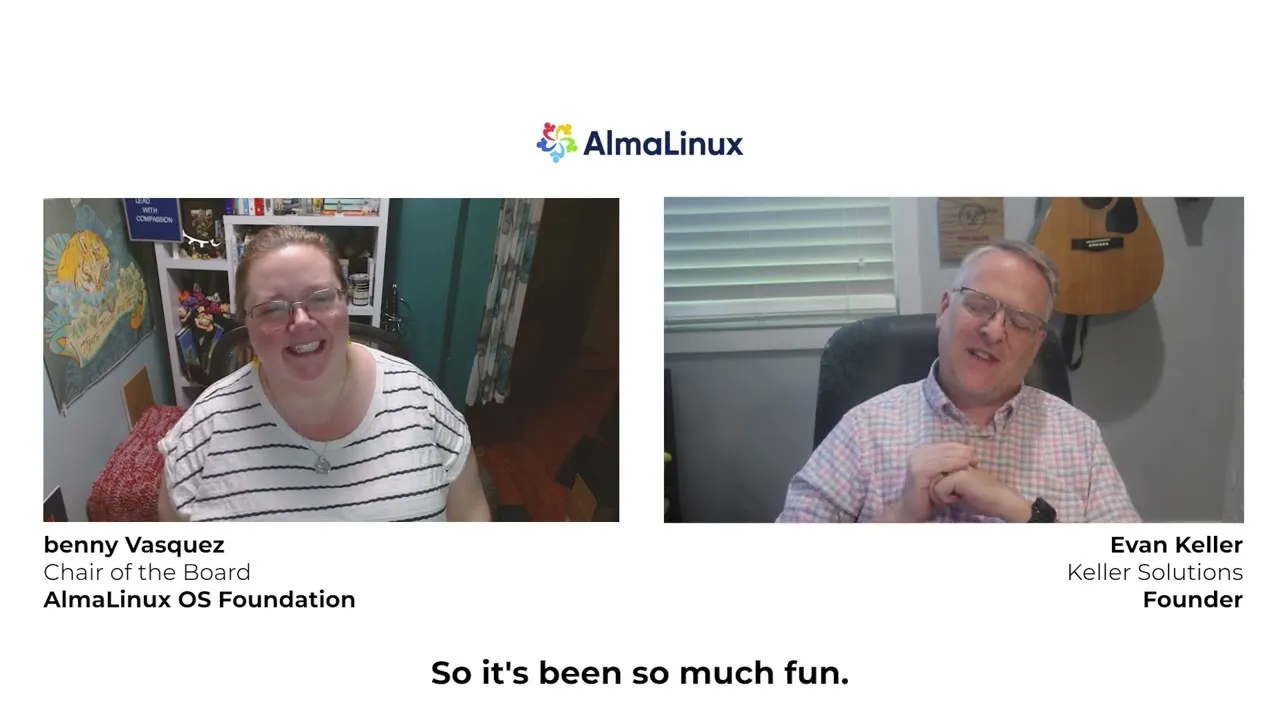
Watch the interview on YouTube. The interview came about because Jonathan Wright, a member of our flying group, encouraged me to try AlmaLinux, used the board several times, and mentioned it to benny. What follows is the longer version, with the pictures a ten-minute video did not have room for.
Where the day job meets the hobby
I have been a web developer for 31 years, and I am a private pilot. Most of my days go to building web applications for clients, and every so often an idea lands on the hobby side of the line. There is a lot of overlap between technologists and pilots. Both groups like instruments, systems, and knowing what is going on around them, and both tend to be tinkerers.
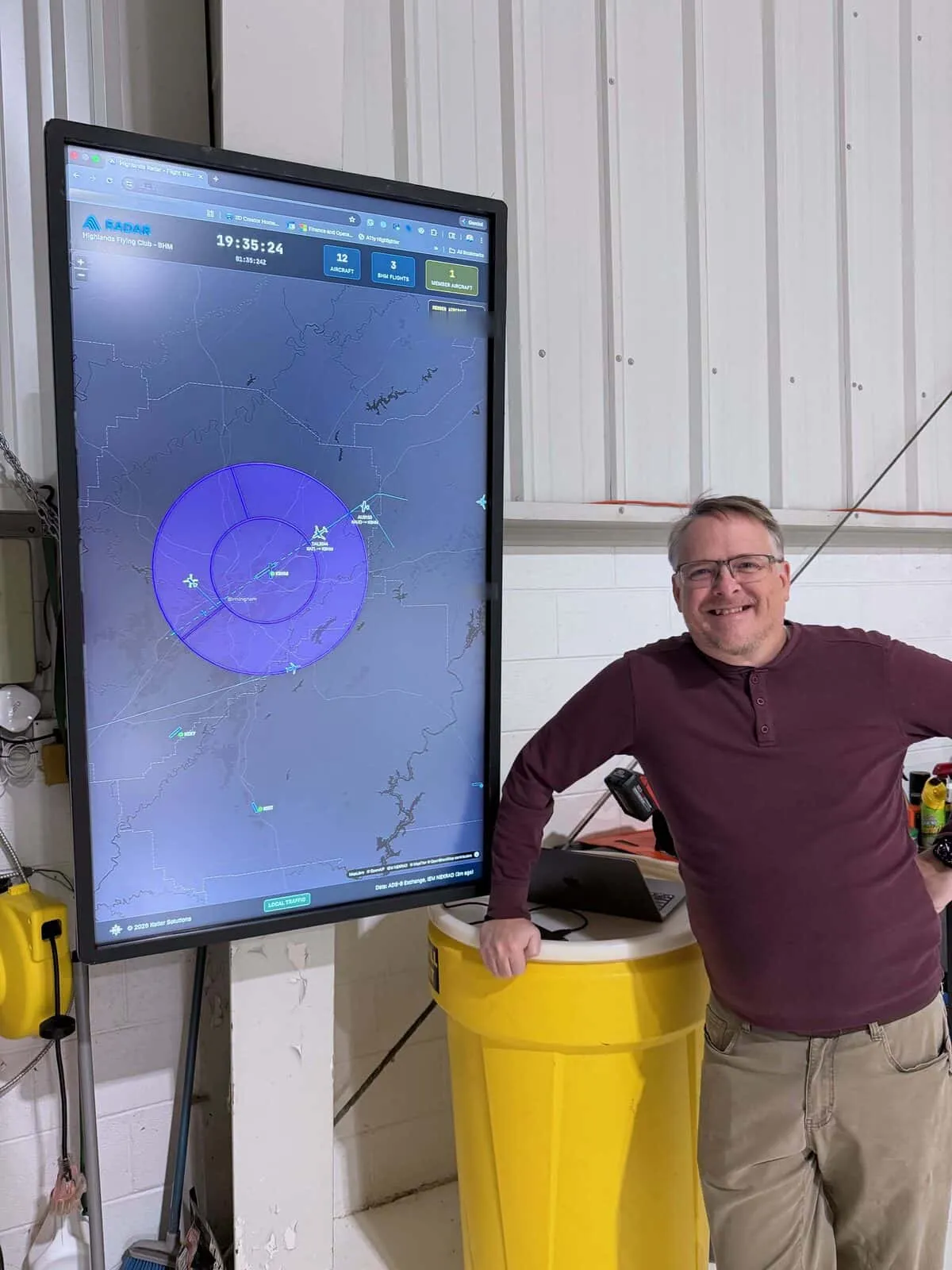
I fly with a group of friends who meet once a week in a hangar at the Birmingham airport. Most of them fly in from other airports, and I was always pulling out my phone to check Flightradar24 or FlightAware to see where everyone was. Those apps show every airplane in the sky to one person holding a phone. I wanted the opposite: a screen on the wall that showed a whole room the handful of planes we cared about.
Mapping is routine work in my business, mostly store locators, and as a ham radio operator I already understood how aircraft broadcast their position over ADS-B. The pieces were all there, so I built it.
What RampScope shows
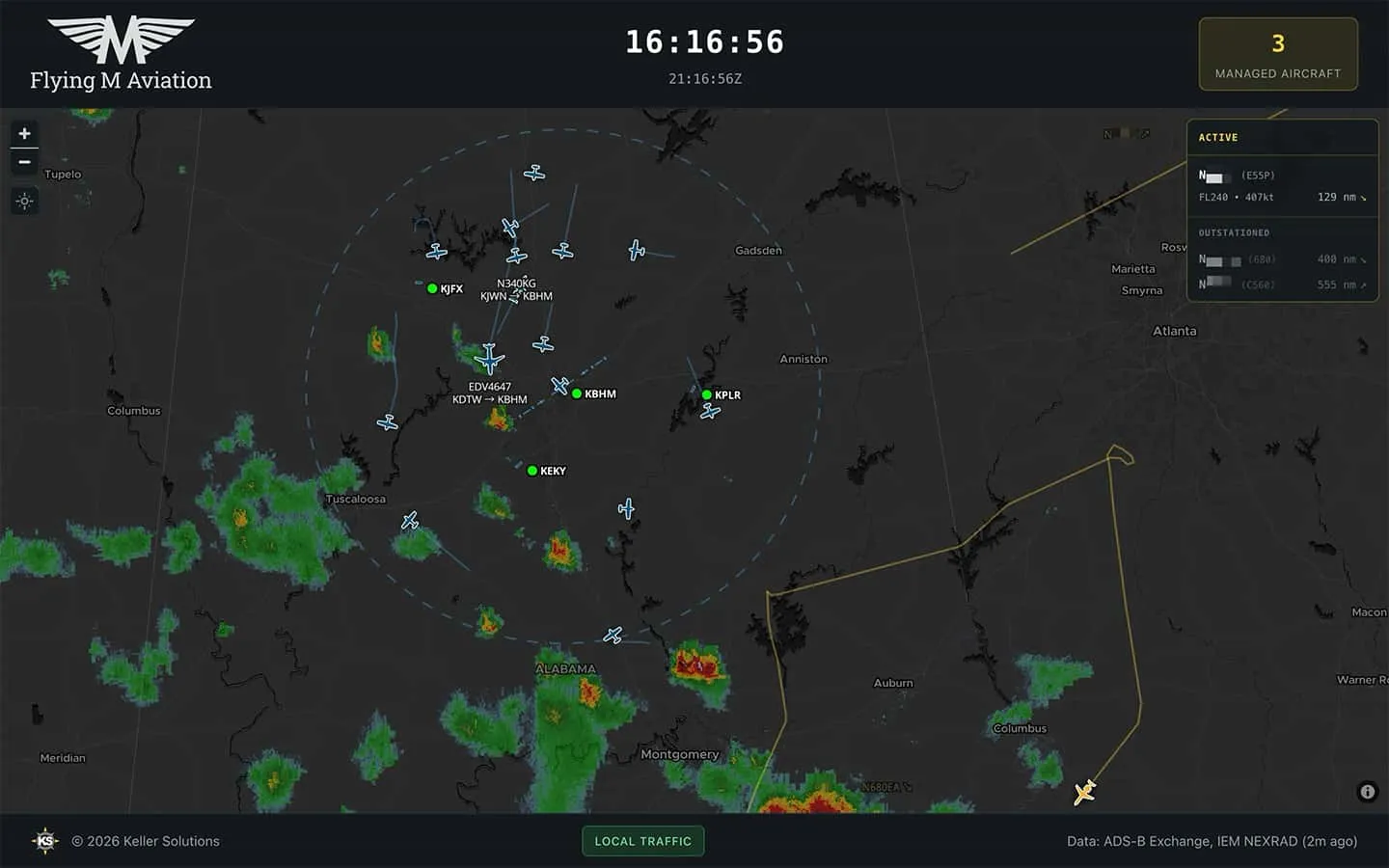
RampScope is a live picture of the ramp. The application pulls public ADS-B data every ten seconds and draws it on a map with NEXRAD weather radar, the current flight rules from the METARs, and the airspace boundaries around the field. Aircraft on the watch list get a gold icon, a two-hour flight trail, and a line in the status table with altitude, speed, and distance out. Everything else is local traffic. At a glance I can see that one of us is lined up behind a Southwest flight and should be next to land, and we all go look at the runway.
The design decision that matters is that nobody has to touch it. Phone apps assume you will search, tap, and zoom. A wall display gets none of that, so the board has to answer the question before anyone asks it: who is up, who is inbound, and what the weather is doing between here and there. The screen in the hangar is a 45- or 50-inch Elo touchscreen, and pinching and zooming on it is fun, but the touch turned out to be the extra. The always-on picture is the point.
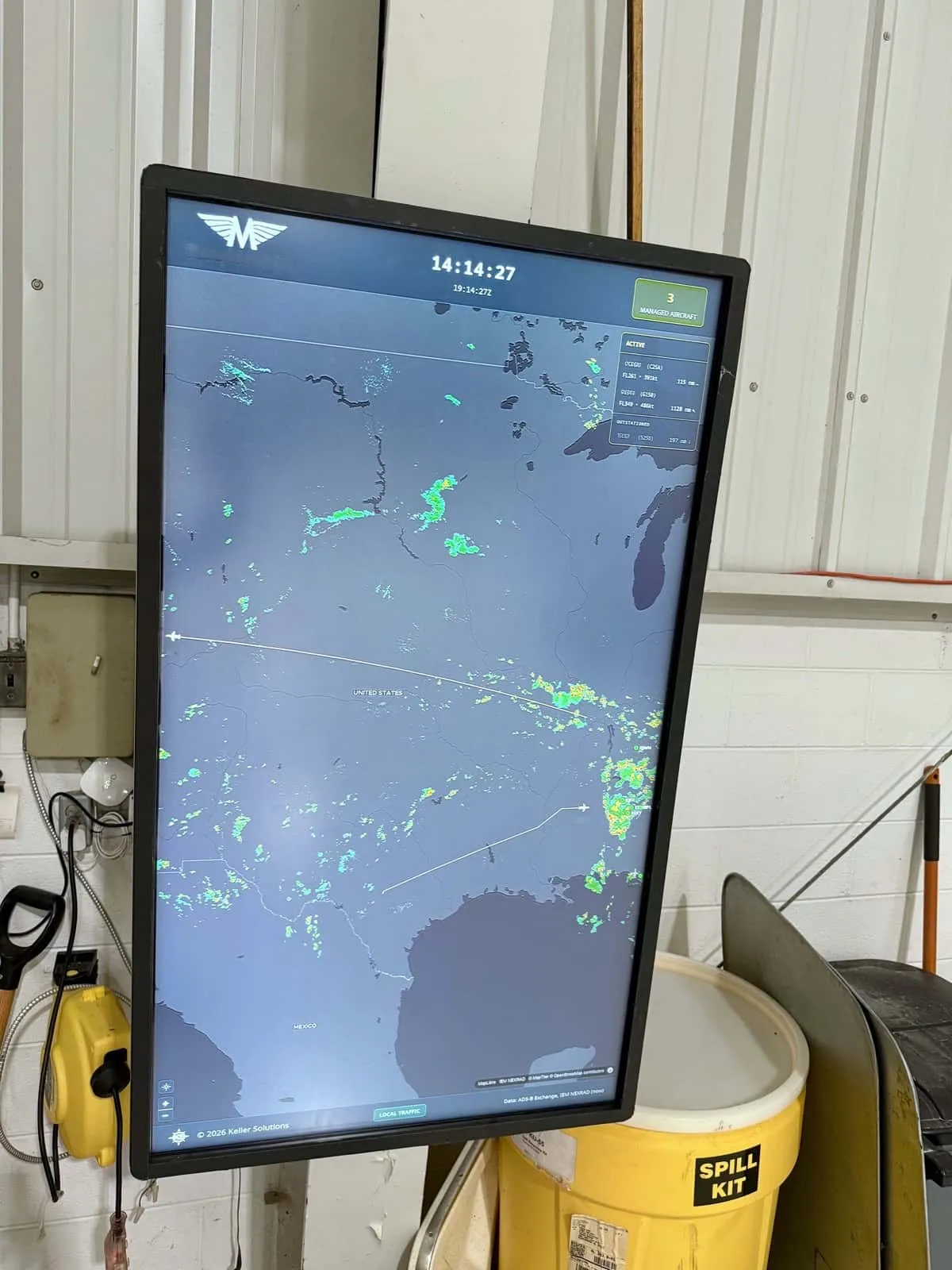
It started on a 27-inch Roku TV. Another pilot in the group had the big touchscreen, so we mounted it vertically, low enough to reach. Most weeks four or five people stand around it. benny called that an unintended community-building consequence, and it is the part I did not plan for and enjoy most.
Why AlmaLinux
I have used Linux for nearly all of those 31 years, going back to running web hosting on Red Hat and CentOS in the 1990s, but this was my first project on AlmaLinux. The hangar board is a Dell desktop running AlmaLinux and driving the Elo screen, and a second copy of the board on a Raspberry Pi hangs on my office wall.
AlmaLinux is the delivery mechanism more than the app. A kiosk needs control of the display and automated maintenance more than it needs anything else, so I wanted an operating system I could get into and customize. The office copy is a good example. My office is also where we hang out at night, and we keep fish in there that need the room dark, so I wrote a set of cron scripts that shut the monitors off every night and bring them back in the morning. Making the technology do what you want it to do is the whole appeal.
What happens next
The board now has a name, RampScope, and lives in KS Labs, where Keller Solutions builds and runs its own products. It is not the only aviation project there. Airport Code Quest turns cross-country flying into a game of collecting airport codes, RouteCraft plans the whole cross-country trip for general-aviation pilots, and ChronoMap is a wall-display map clock descended from the ones in mid-century flight-planning offices. The same thread runs through all of them: things I wanted as a pilot, built with what I know as a developer.
I customized the hangar’s copy as a thank-you for letting us use the space. On meeting nights it switches to our watch list, and the rest of the week it tracks their aircraft. The app already supports a branded display per customer on its own subdomain, so the software side of what comes next is getting it into fixed-base operator (FBO) lobbies, flight school front desks, and corporate flight departments beyond that first hangar. On the hardware side, I want the AlmaLinux kiosk build documented and repeatable so the next board is easy to stand up.
Some of the pilots who stop to look at it each week work in flight departments for local companies, and a few have asked whether their departments could buy it. RampScope.com has the current version and plans. If you run an FBO, a flight school, or a corporate flight department and want a branded display with your fleet highlighted, that is the place to start.